Research

Nace Meta Agent
At Nace.AI, we are pioneering the future of AI system development through advanced meta-learning architectures designed to generate specialized, task-specific agents automatically. Our Nace Meta-Agent (NEMA) exemplifies this approach. NEMA successfully created an AI system capable of tackling the difficult Certified Public Accountant (CPA) exam, achieving performance comparable to leading generalist models like OpenAI's o1. This breakthrough highlights the power and efficiency of our meta-agent technology for creating highly specialized AI systems that can be rapidly deployed for complex, domain-specific challenges, offering organizations a significant competitive advantage.
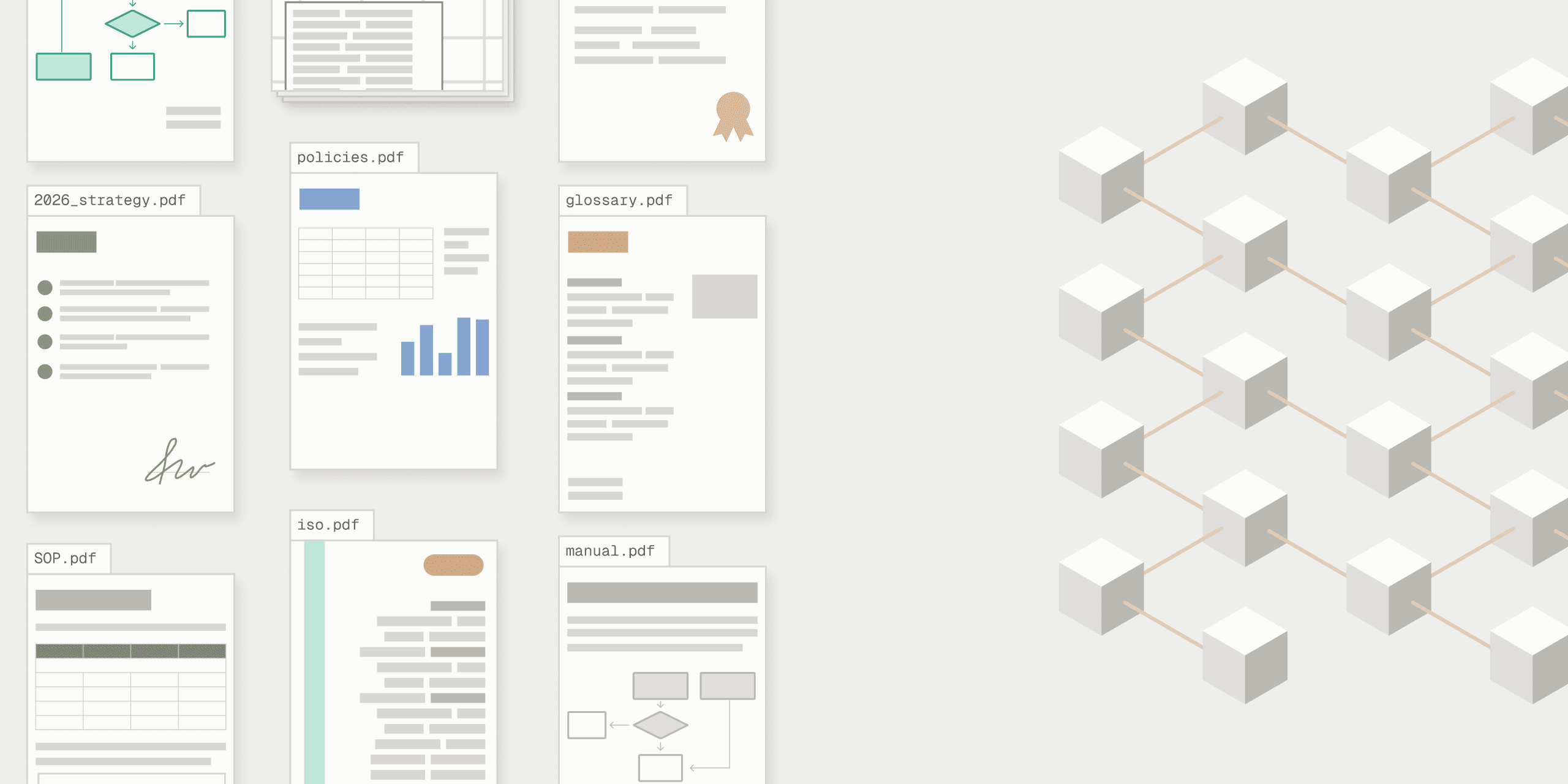
Enterprise Policy Injection with Metamodels
Nace AI Research Team · May 2026

Policy-driven Safeguards Comparison
Introducing NAVI Console: advancing automated policy compliance verification

Knowledge Graph Synergy with LLMs
AI systems today can write essays, answer complex questions, and summarize entire documents – yet they still get facts wrong, struggle with specialized domains, and offer little transparency into their reasoning. The missing piece, increasingly, turns out to be structure. Knowledge Graphs (KGs) organize facts as explicit, verifiable relationships between entities – complementing where LLMs fall short. This article breaks down what KGs are, how they pair with LLMs, and where that combination is already making AI systems more reliable and trustworthy. No ML background required.

Understand LLMs From the Perspective of Ranking
Understanding LLMs through a ranking perspective is insightful. Following pre-training, most performance enhancements concentrate on reranking by fine-tuning the proposal distribution to better align with task-specific requirements. Task-specific ranking criteria can be incorporated either as loss functions during training or as tokens during inference. Over time, optimizing both training and inference phases, along with iterative refinements, is essential for continued performance gains.

A Letter from the Founders of Nace.AI
Introducing MetaModel

Progressing Towards Meta Models and What Lies Beyond
Revolutionizing enterprise AI with tailored, meta-learned Small Language Models for rapid, efficient adaptation.

Hypernetworks for Specialized Instructions
Hypernetworks: efficient fine-tuning of LLMs through task-specific parameter generation

Memory augmentation for document heavy enterprise use case
Enterprise use cases often demand robust knowledge integration, requiring memory augmentation in LLM-based systems. Retrieval-Augmented Generation (RAG) stands out as a reliable solution, where knowledge is maintained in text format, leveraging inference-time retrieval and in-context learning. At Nace, we’ve developed a modular RAG pipeline tailored to enterprise needs. In our verification use case [link to blog], we achieved over 90% F1 score—an improvement from the ~80% F1 score of a naive solution.
Nace Meta Agent
At Nace.AI, we are pioneering the future of AI system development through advanced meta-learning architectures designed to generate specialized, task-specific agents automatically. Our Nace Meta-Agent (NEMA) exemplifies this approach. NEMA successfully created an AI system capable of tackling the difficult Certified Public Accountant (CPA) exam, achieving performance comparable to leading generalist models like OpenAI's o1. This breakthrough highlights the power and efficiency of our meta-agent technology for creating highly specialized AI systems that can be rapidly deployed for complex, domain-specific challenges, offering organizations a significant competitive advantage.
Enterprise Policy Injection with Metamodels
Nace AI Research Team · May 2026
Policy-driven Safeguards Comparison
Introducing NAVI Console: advancing automated policy compliance verification
Knowledge Graph Synergy with LLMs
AI systems today can write essays, answer complex questions, and summarize entire documents – yet they still get facts wrong, struggle with specialized domains, and offer little transparency into their reasoning. The missing piece, increasingly, turns out to be structure. Knowledge Graphs (KGs) organize facts as explicit, verifiable relationships between entities – complementing where LLMs fall short. This article breaks down what KGs are, how they pair with LLMs, and where that combination is already making AI systems more reliable and trustworthy. No ML background required.
Understand LLMs From the Perspective of Ranking
Understanding LLMs through a ranking perspective is insightful. Following pre-training, most performance enhancements concentrate on reranking by fine-tuning the proposal distribution to better align with task-specific requirements. Task-specific ranking criteria can be incorporated either as loss functions during training or as tokens during inference. Over time, optimizing both training and inference phases, along with iterative refinements, is essential for continued performance gains.
A Letter from the Founders of Nace.AI
Introducing MetaModel
Discover NAVI in under 30 minutes

See how real-time AI can accelerate your workflows.
Get hands-on with a guided demo

Discover NAVI in under 30 minutes
See how real-time AI can accelerate your workflows.
Get hands-on with a guided demo
Discover NAVI in under 30 minutes
See how real-time AI can accelerate your workflows.
Get hands-on with a guided demo